Behind the temples and street food, Yogyakarta has a living world of spirits, sacred places and daily rituals. Here are fun facts and how to visit with respect.
Yogyakarta is more than temples and street food. Beneath the surface, there is a world of spirits, sacred places and small daily rituals that many locals still live with today. These fun facts will help you see Java with new eyes.
A quick note: Many Javanese call these traditions kejawen or "ancestral customs." They blend old Javanese beliefs with Hinduism, Buddhism and Islam. Outsiders sometimes call it animism. For many Javanese, practicing their religion and keeping these traditions are not in conflict.
In 30 seconds
- A straight line links a volcano, the palace and the sea, and UNESCO protects it.
- The palace sends gifts to the volcano and the ocean every year.
- Locals believe in a Queen of the Southern Sea.
- Small offerings of flowers and incense appear everywhere, every day.
- You can try a blindfold walk between two sacred trees.
Fun fact 1: The magic line
Yogyakarta was planned along an invisible north-south axis. It runs from Mount Merapi, through the Tugu monument and the Sultan's Palace, down to the Indian Ocean. UNESCO named it a World Heritage site in 2023. For many Javanese, it joins mountain, human world and sea in balance.
Fun fact 2: The palace sends gifts to a volcano
Once a year, the Sultan's Palace holds a ceremony called Labuhan. Carefully prepared offerings are sent to the sea at Parangkusumo beach, and also to Mount Merapi and Mount Lawu. It is a prayer for safety and a way of letting go of bad things.
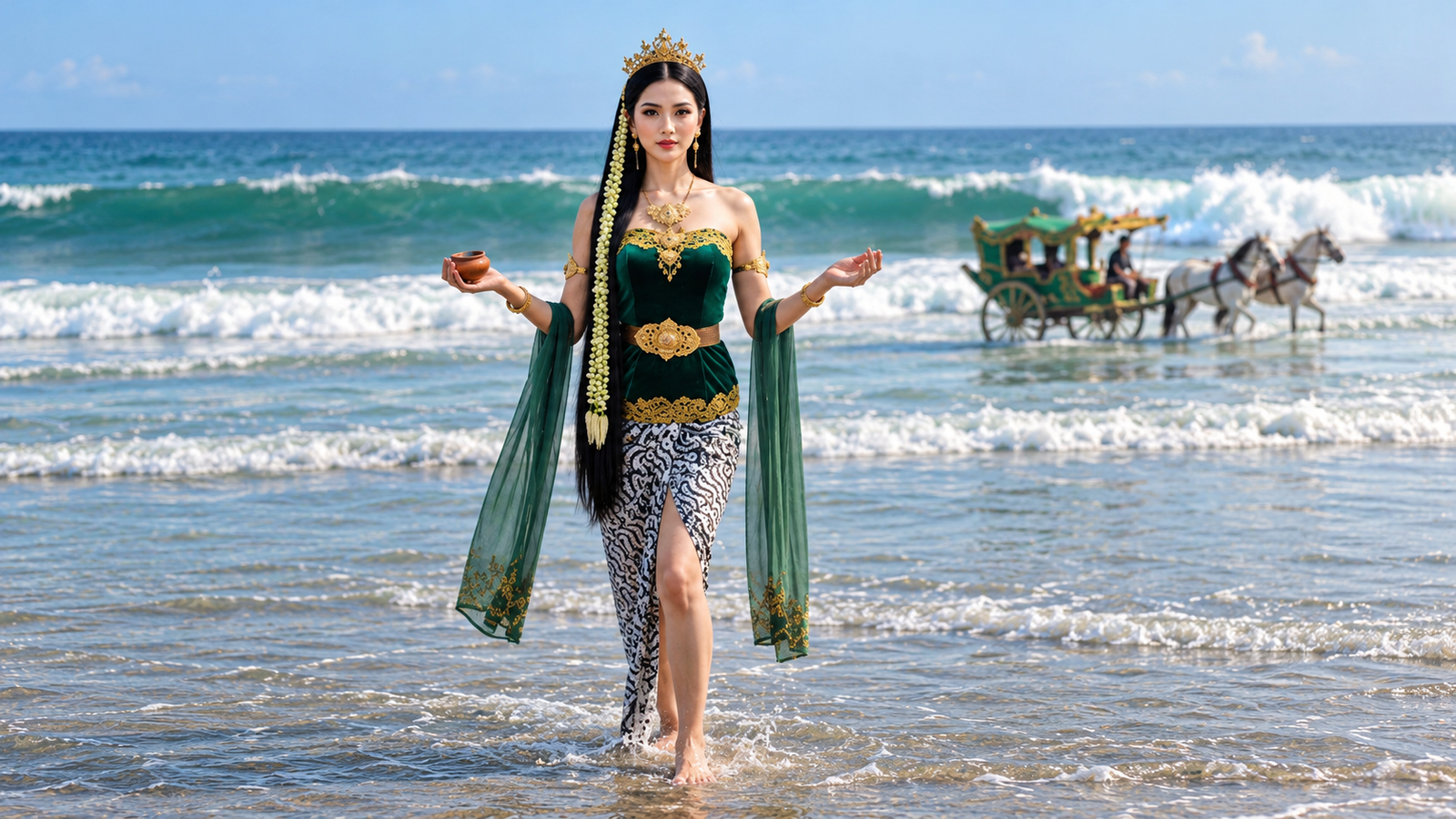
Fun fact 3: The Queen of the Southern Sea
Locals tell of Kanjeng Ratu Kidul, a powerful spirit queen who rules the southern ocean. Legend says the founder of the old Mataram kingdom met her at Parangkusumo and made an agreement for his kingdom. A well-known local belief says visitors should not wear green by the southern beaches. Many people simply follow it to be polite.
Fun fact 4: Merapi is not just a volcano
To many villagers on its slopes, Merapi is a living presence with its own guardians, not only a mountain. A local "keeper" looks after the spiritual side, and people speak about the mountain with great respect.
Fun fact 5: Little offerings everywhere
Look down at doorways, shops, trees and crossroads. You will often see small trays with flowers, incense and food. These are sesajen, offerings of thanks and protection. They are not trash, so please step around them.
Curious to see this side of Java with someone who can explain it? Ask us on WhatsApp. We love sharing these stories.
Fun fact 6: The blindfold walk
In the southern square of the palace stand two giant banyan trees. Locals say that if you can walk blindfolded between them in a straight line, a wish may come true. It is harder than it sounds, and watching others try is half the fun.
Fun fact 7: A blade with a soul
The keris, a wavy dagger, is more than a weapon. Many families treat an old keris as an heirloom with spiritual presence. UNESCO recognized the keris as a masterpiece of intangible heritage in 2005. Each year, many families clean theirs in a special ritual.
Fun fact 8: The cone of rice
At celebrations you may see a tall cone of yellow rice called tumpeng. It is shared in a communal meal called slametan, held to ask for safety, thank others or mark a new beginning. If you are invited, say yes. It is a warm honor.
Fun fact 9: The silent midnight walk
On the eve of the Javanese New Year, many people walk in silence around the palace walls at midnight. No talking, no phones. The date follows the Javanese calendar, which changes every year, so check before you go.
Fun fact 10: A five-day week
Javanese tradition has a second calendar with a five-day cycle, alongside our seven-day week. Combined, they create special dates that some families use to choose good days for weddings or travel.
How to visit with respect
- Do not touch or step on offerings.
- Ask before taking photos of rituals or people praying.
- Dress modestly at sacred sites. Cover shoulders and knees.
- Keep your voice low and avoid joking about spirits.
- Take nothing, leave nothing at shrines, including coins and flowers, unless a local invites you.
- Be curious, not skeptical. A polite question usually gets a warm answer.
Where to see it
- The Sultan's Palace: court traditions and heirlooms.
- The southern square: the two banyan trees.
- Parangtritis and Parangkusumo beaches: the sea and its legends.
- Village life around Merapi: rituals close to the mountain.
Want a local to explain what you see?
You can explore all of this on your own. But much of it has hidden meaning, and a local can explain why that little tray of flowers is there, or why a tree is wrapped in cloth. If you would like to see this side of Java in a relaxed, respectful way, we are happy to chat. No pressure at all.
Chat with us on WhatsApp: +62 812 2804 6928
Experience Java Tour, Yogyakarta. Selamat jalan, safe travels!